WEBSITE DESIGN VANCOUVER: How a Professional Web Designer Helps You Every Step of the Way
BUILDING A WEBSITE DOESN’T HAVE TO FEEL COMPLICATED
If you are starting a new business or finally replacing an outdated website, you may already have a long list of questions.
✛ Where should I buy my domain?
✛ What platform should I use?
✛ Do I need hosting?
✛ How do I create a professional business email?
✛ What should be on my homepage?
✛ What is UX and UI?
✛ How do I show up on Google?
✛ Will my website work properly on mobile?
It can quickly become overwhelming, especially when your expertise is running your business, not building websites.
That is exactly where working with a professional website designer in Vancouvercan make the process much easier.
A good web designer should not simply ask you to send over some text and photos and then disappear for a few weeks. The designer should guide you through the entire process step by step, explain your options clearly, help you make the right decisions, and create a website that supports your actual business goals.
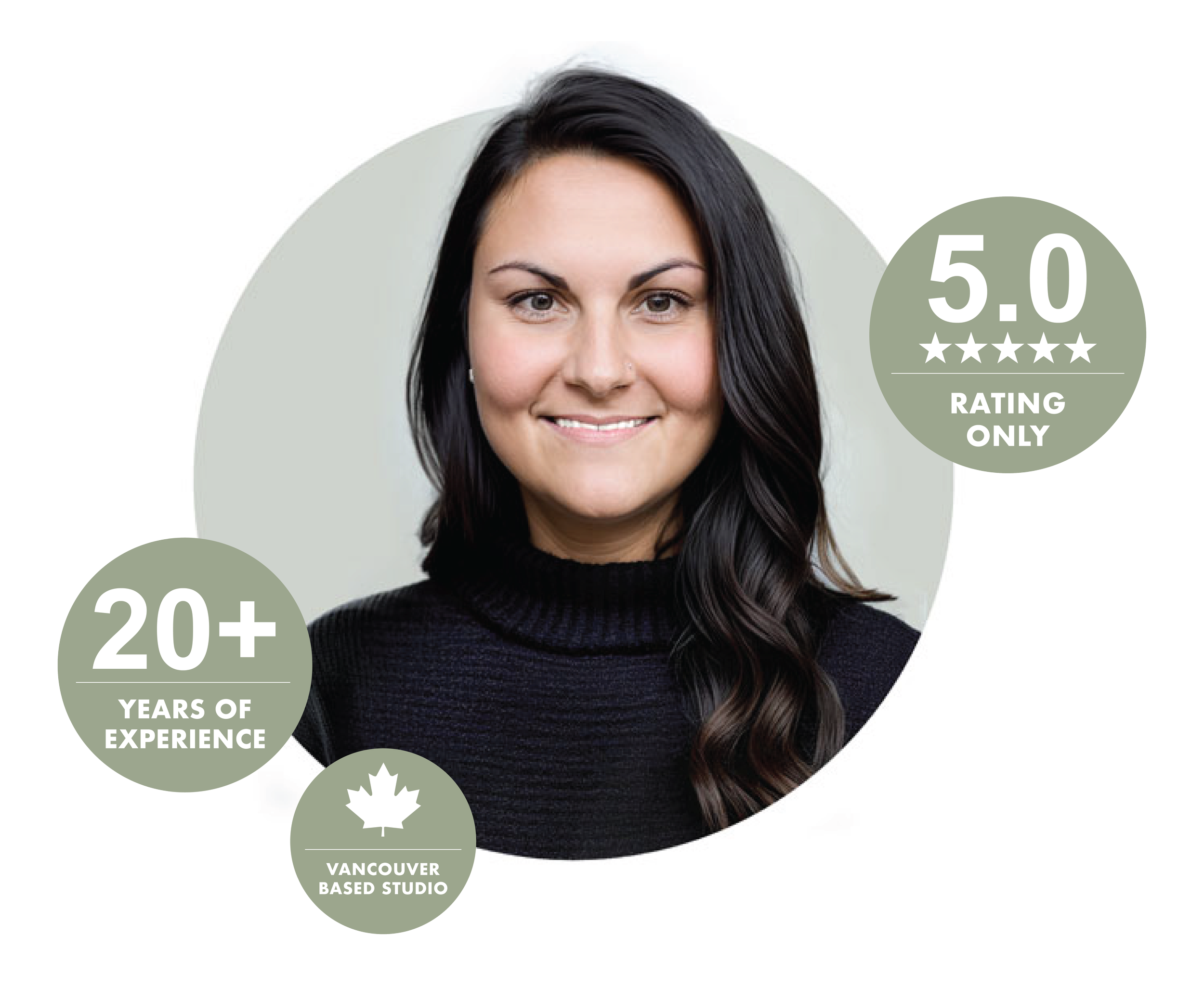
At LUCIED Branding & Web Design Studio in Vancouver, I help clients through the entire website design process, from the first idea and domain name to UX/UI design, SEO, mobile optimization, launch, and everything in between.
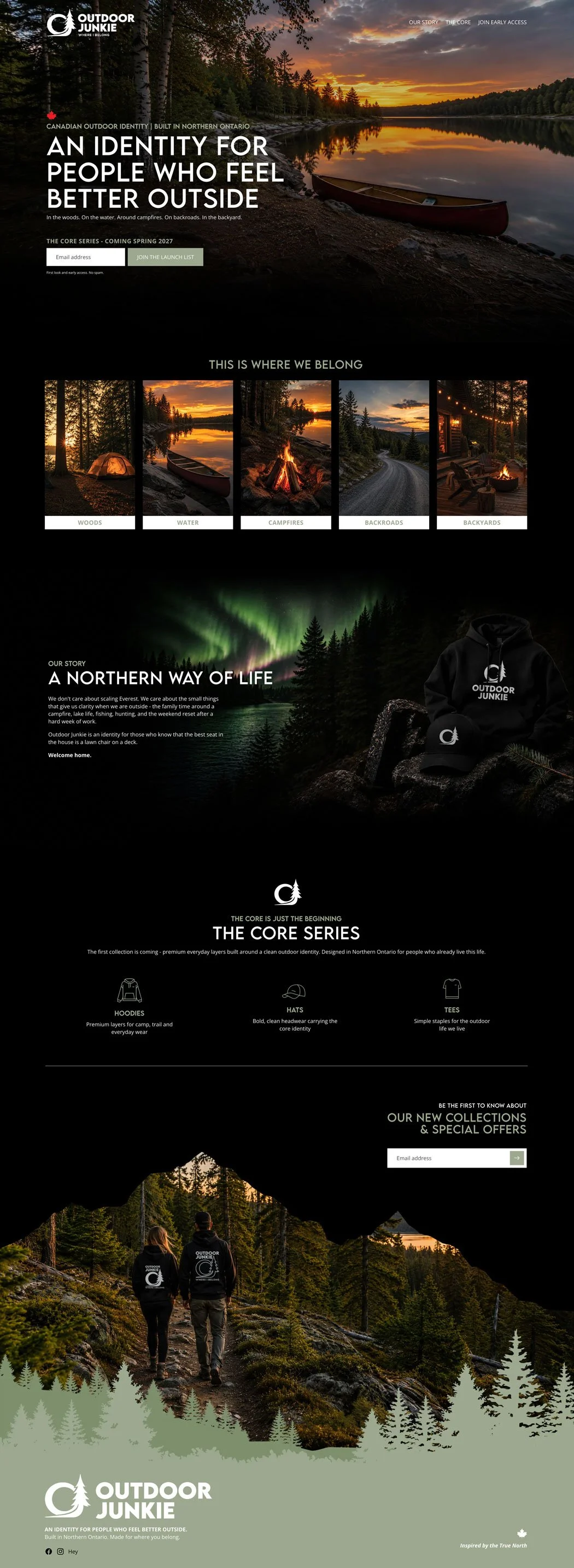
VISIT THE WEBSITE: www.outdoorjunkie.ca
1. WE START WITH YOUR BUSINESS, NOT WITH A WEBSITE TEMPLATE
Before choosing colours, layouts or images, we need to understand your business.
What services or products do you offer? Who are your ideal customers? What makes your business different? What action do you want visitors to take when they arrive on your website?
Maybe you want more phone calls. Maybe you need customers to request quotes, book appointments, visit your store, purchase products online, join an email list or learn more about a specialized service.
Your website should be designed around those goals.
This first step creates the foundation for everything that follows. Instead of simply making something that looks attractive, we create a website with a clear purpose.
2. CHOOSING THE RIGHT WEBSITE PLATFORM
One of the first technical decisions is choosing where your website should be built. There is no single platform that is perfect for every business.
A service-based company may need something completely different from an online store. A small local business may prioritize simplicity and easy editing, while another company may need advanced integrations or more complex functionality.
Depending on the project, platforms such as Squarespace, Shopify, WordPress, Webflow, or Wix may all be considered.
As your web designer, I can help you understand the advantages and limitations of different options and choose the platform that makes the most sense for your business today while also considering how you may want to grow in the future.
You should not have to become a web developer just to choose the right system.
3. CHOOSING AND CONNECTING YOUR DOMAIN NAME
Your domain is your business address online, and choosing the right one matters. Ideally, it should be clear, professional, easy to remember and closely connected to your business name or brand.
If you do not already have a domain, I can help you understand what to look for and how to choose an appropriate option. If you already own one, I can help connect it correctly to your new website when it is ready to launch.
We can also consider whether your domain makes sense from a branding perspective and whether customers will be able to easily type, remember and recognize it.
It may seem like a small detail, but it is an important part of creating a professional online presence.
4. SETTING UP A PROFESSIONAL BUSINESS EMAIL
Your website and your business email should work together.
Using an address such as hello@yourcompany.com or info@yourcompany.com generally creates a much more professional impression than using a personal email account for customer communication.
If you are unsure how professional email works, I can guide you through the process of choosing an email provider and connecting your business email to your domain.
The goal is to make your digital presence feel consistent.
Your logo, website, domain, email and other brand touchpoints should all feel like parts of the same professional business.
5. PLANNING THE WEBSITE STRUCTURE
Before designing pages, we need to decide what those pages should actually contain.
For many businesses, that may include a Home page, About page, Services pages, Portfolio or Projects, FAQs, Blog and Contact page.
But the exact structure depends on your business. A website should make it easy for visitors to understand three things very quickly:
Who are you?
What do you offer?
What should they do next?
I help organize your website so visitors do not have to search for important information or wonder where to click.
This is where strategy begins to connect with UX design.
6. UX DESIGN: MAKING YOUR WEBSITE EASY TO USE
UX means User Experience. It is about how someone experiences your website from the moment they arrive.
Can they immediately understand what your business does? Is the navigation easy to use? Can they quickly find your services? Is it obvious how to contact you? Are important buttons placed where people naturally expect to find them?
Good UX should feel effortless. Visitors should not have to think about how to use your website. The structure should naturally guide them from one section to another. For a Vancouver service business, for example, someone may arrive through Google, read about a service, look at previous projects, check reviews and then request a quote. The website should make that journey simple.
7. UI DESIGN: HOW YOUR WEBSITE LOOKS AND FEELS
UI means User Interface, and this is where the visual side of the website becomes especially important.
Typography, colours, photography, spacing, buttons, icons and layouts all influence how customers perceive your business.
Your website should feel connected to your brand. If you provide a premium service but your website looks generic or outdated, potential customers may form the wrong impression before they ever speak with you.
As a branding and website designer, I look at the website as part of your complete visual identity rather than as a separate product. The goal is to create consistency between your logo, branding, website and marketing.
8. CUSTOM WEBSITE DESIGN THAT FITS YOUR BUSINESS
Templates can be useful starting points, but your business should not have to squeeze itself into a layout simply because that is how a template was built.
With custom website design, the structure and visual direction can be created around your content, brand and business goals.
Your website should feel like your company. That means thinking about how your photography is displayed, how much information appears on each page, where calls to action are positioned, how services are presented and how the overall visual experience supports your brand. The result should be distinctive while still remaining functional and easy to navigate.
9. RESPONSIVE WEBSITE DESIGN FOR MOBILE, TABLET AND DESKTOP
Your customers will not all see your website on the same screen. Some will visit from a large desktop monitor. Others will use a laptop, tablet or smartphone. That means your website needs to be responsive.
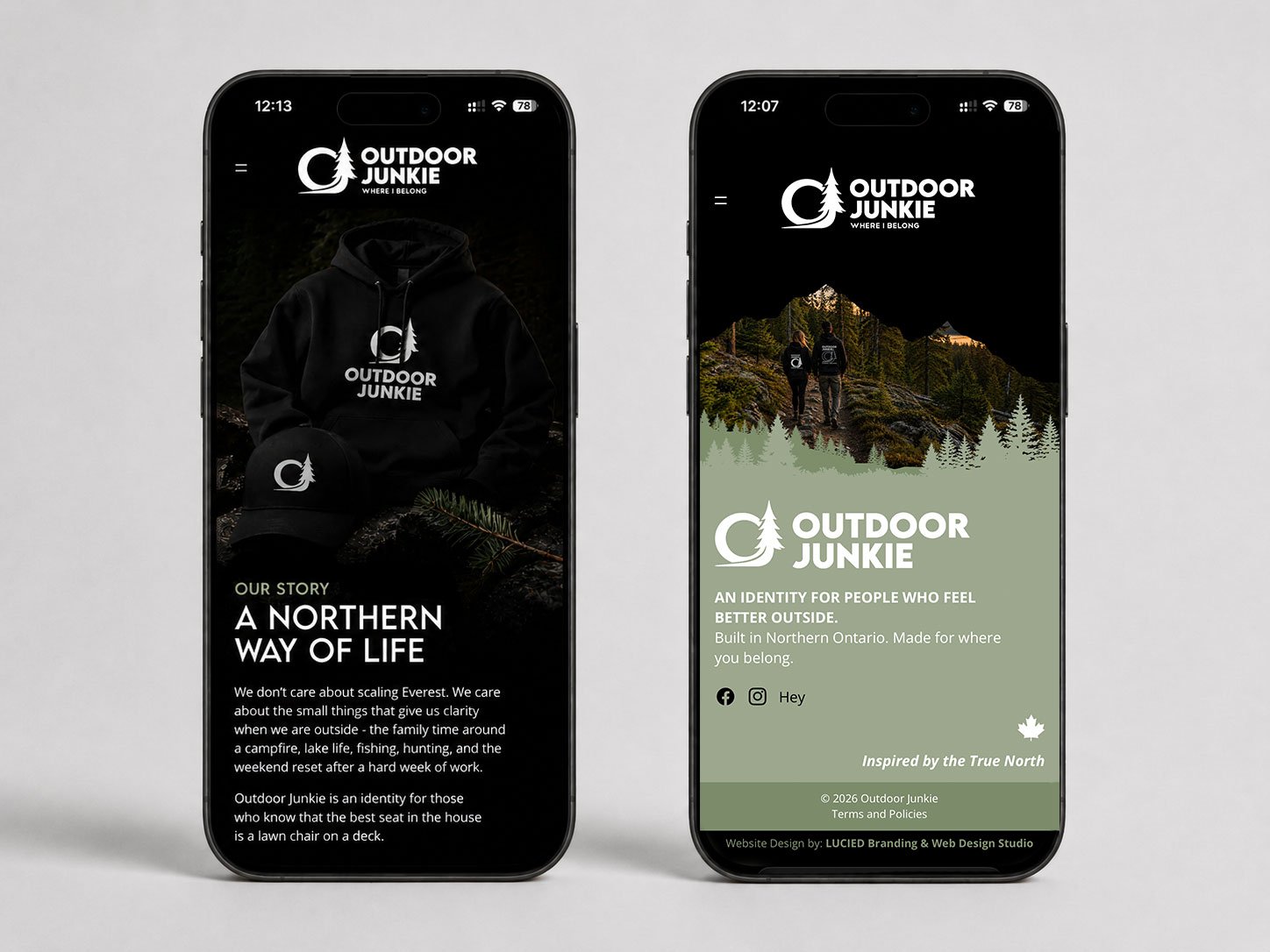
Responsive web design adjusts layouts, typography, images and navigation so the site remains easy to use across different screen sizes. This is more than simply shrinking the desktop website. Images may need different positioning. Text may need to be rearranged. Buttons need to remain easy to tap. Navigation must work properly, and important information should still appear in the right order.
During the design process, I consider how your website works across devices so your customers receive a consistent experience wherever they find you.
10. SEO SHOULD BE PART OF THE WEBSITE FROM THE BEGINNING
That is why search engine optimization, or SEO, should be considered during the website design process rather than treated as something completely separate after launch.
For a Vancouver business, this can include understanding what potential customers search for, organizing pages around your important services, writing clear page titles and descriptions, creating a logical heading structure, optimizing images, improving page structure and making sure search engines can understand what your business offers.
For example, a business that wants to be found for website design in Vancouver should have relevant, genuinely useful content explaining those services rather than repeating the same keyword everywhere. SEO is a long-term strategy, but building your website on a strong SEO foundation gives your business a much better place to start.
11. DESIGNING THE WEBSITE TO HELP TURN VISITORS INTO CUSTOMERS
Getting visitors to your website is only part of the goal. What happens after they arrive? Every page should have a purpose and a logical next step.
That could be:
• Request a quote
• Book a consultation
• Call your business
• Purchase a product
• View your portfolio
• Fill out a questionnaire
• Join your mailing list
Good website design combines visuals, messaging, trust and clear calls to action so visitors are encouraged to move forward. Your website should not simply exist online. It should actively support your sales and marketing.
12. CONNECTING THE TOOLS YOUR BUSINESS NEEDS
Modern websites often need to do much more than display information.
Depending on your business, we may need to connect contact forms, booking systems, email marketing, social media, Google Analytics, e-commerce, payment systems, maps or other business tools. Part of professional website design is looking beyond how a page appears and thinking about how the website fits into your day-to-day business. The goal is to make things easier for both you and your customers.
13. TESTING EVERYTHING BEFORE LAUNCH
Before your website goes live, the details matter.
Links should work. Forms should be tested. Images should display correctly. Mobile layouts should be reviewed. Buttons should go to the right places. Basic SEO settings should be checked and the overall experience should feel consistent.
Only then is it time to connect the domain and launch. And when the website goes live, you should understand how it works rather than feeling dependent on your designer forever. I can guide you through the basics so you feel comfortable managing everyday updates after launch.
YOU DON’T NEED TO KNOW HOW TO BUILD A WEBSITE. THAT’S WHAT YOUR DESIGNER IS FOR.
At LUCIED Branding & Web Design Studio, we don't just design pretty visuals. We blend strategic visual identities with high-performing, mobile-friendly websites designed to build trust and turn local visitors into loyal clients.
Let’s create a professional website that looks like your business, works for your customers and supports your growth. From your domain name and professional email to UX/UI, SEO, custom web design, responsive development and launch, every piece should work together.